Thursday, April 20, 2023

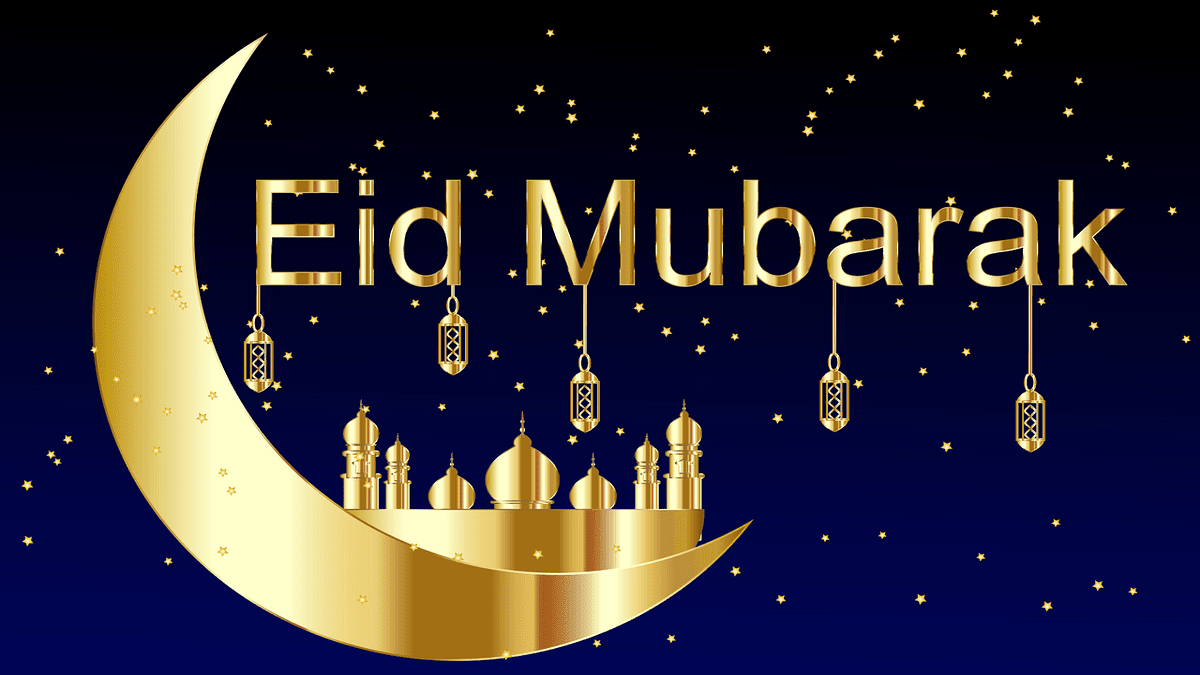
Happy Eid-Ul-Fitr 2023: 50+ Top Eid Mubarak Wishes, Messages, Quotes, Images, Whatsapp Status And More On Eid-Ul-Fitr

Eid Ul-Fitr 2023 best wishes

1. May Allah fill your life with good health and happy moments. Eid Mubarak! 


2. On this joyous day of Eid-ul-Fitr, I wish you and your family a very happy Eid. May Allah accept all your prayers and forgive all your faults. Eid Mubarak!"


3. May the blessings of Allah fill your life with happiness and open all the doors of success now and always. Eid Mubarak!

Eid ul Fitr 2023 best wishes 


4. Wishing you a happy and peaceful Eid filled with love and happiness. 


5. On this special occasion, I wish Allah opens for you the doors of success and prosperity…. Warm wishes on Eid to you!!!


Wishing you and your family a very happy and blessed Eid.


6. May Allah bless you with love, peace, and prosperity on this special day. 


10. May this Eid bring you peace, happiness, and success in all your endeavors.


Eid Ul-Fitr 2023 best messages

1. May Allah bless you with happiness and prosperity on this joyous occasion of Eid ul Fitr. Eid Mubarak!


2. May the blessings of Allah fill your life with joy and peace. Wishing you a very happy Eid ul Fitr!


3. On this auspicious day, may Allah accept all your prayers and grant you peace and happiness. Eid Mubarak!


4. May this Eid bring you lots of love, happiness, and success in all your endeavors. Have a blessed Eid ul Fitr!


5. May Allah shower his choicest blessings upon you and your family on this Eid ul Fitr. Eid Mubarak!


6. May this Eid be filled with joy, laughter, and lots of sweet memories. Happy Eid ul Fitr to you and your loved ones!


7. May the spirit of Eid bring peace and prosperity to your life. Eid Mubarak!


8. Wishing you a very happy Eid ul Fitr filled with love, peace, and happiness. Enjoy this special day with your loved ones!


9. On this joyous occasion of Eid, may Allah bless you with good health, wealth, and happiness. Eid Mubarak!


10. May the blessings of Allah fill your life with joy, success, and happiness. Have a wonderful Eid ul Fitr!


Eid Ul-Fitr 2023 best whatsapp status

1. May this Eid bring a lot of blessings and happiness to your life.


2. Wishing you a very happy and peaceful Eid ul Fitr.


3. May Allah accept our prayers and grant us forgiveness on this holy day.


4. Let's cherish the moments we share with our loved ones on this special day.


5. May Allah's blessings be with you always and forever.


6. Eid Mubarak to all my loved ones near and far.


7. Let's make this day a memorable one by spreading love and happiness.


Eid Ul-Fitr 2023 quotes

1. "Eid is a time to come together as a community and celebrate our faith and our commitment to Allah." - Unknown


2. "May Allah's blessings be with you on this Eid and always, and may you be surrounded by your loved ones and your faith." - Unknown


3. "Eid is a day to remember that Allah is always with us, guiding us, protecting us, and showering us with his blessings." - Unknown


4. "Eid is a time to celebrate the end of Ramadan, and the beginning of a new chapter in our lives." - Unknown 


5. "May the blessings of Allah fill your life with happiness, peace, and prosperity on this Eid and always." - Unknown


6. "Eid is a day to express gratitude for all the blessings in our lives, and to pray for those who are less fortunate than us." - Unknown


7. "Eid is a time to come together as a family, to forgive and forget, and to renew our commitment to Allah." - Unknown


8. "May Allah's blessings be with you on this Eid, and may your prayers be answered and your dreams come true." - Unknown


9. "Eid is a day to remember that we are all brothers and sisters, united in our love for Allah and our commitment to peace and justice." - Unknown


10. "May the joy of Eid fill your heart with love, peace, and happiness, and may Allah bless you with all his blessings." - Unknown


11. "Eid is a time to share the love and happiness with those around us, and to remember those who are less fortunate than us." - Unknown


12. "May Allah's blessings be with you on this Eid, and may your life be filled with love, peace, and happiness." - Unknown


13. "Eid is a time to celebrate the beauty of life, the power of faith, and the love of family and friends." - Unknown


14. "May Allah bless you with the strength to overcome all the obstacles in your life, and the courage to face all the challenges ahead." - Unknown


15. "Eid is a time to reflect on the beauty of life, to be grateful for all the blessings in our lives, and to pray for those who are struggling." - Unknown


Eid Ul-Fitr 2023 wishes in hindi

1. Eid Mubarak, Khushiyaan hazaar laayein aapke ghar ki taraf!


2. Dil ki gehraiyon se Eid Mubarak ho, khushiyaan aapke kadam choomein.


3. Aapki zindagi me khushiyan ho, dilon mein pyaar ho, Eid Mubarak ho!


4. Har raah aasan ho, har raah pe khushiyaan ho, Eid Mubarak ho aapko!


5. Zindagi ki har khushiyan aapke paas aayein, Eid Mubarak ho!


6. Eid ka chand aapki zindagi mein roshan ho, aapko khushiyan dene wala ho!


7. Chand ki pehli dastak pe Eid Mubarak ho, aapke ghar khushiyon ki barkat ho.


8. Aapke ghar mein barkat ho, aapki zindagi khushiyon se bhari ho, Eid Mubarak ho!


9. Dilon mein pyaar aur khushiyan ho, Eid Mubarak ho!


10. Eid ka din aapke liye khushiyaan aur hansi laayein, Eid Mubarak ho!


Eid Ul-Fitr 2023 best images to send or use them as Whatsapp status


Eid ul Fitr 2023 in Saudi Arabia, Canada, USA, UK, India, Oman, moon sighting in Saudi Arabia,


Eid ul Fitr 2023 in Saudi Arabia :
Eid-ul-Fitr 2023 moon sighting highlights: Shawwal crescent moon sighted in Saudi, UAE, Muslims to mark Eid on April 21 Festivals. 
Eid ul Fitr 2023 in Saudi Arabia 

   Updated on Apr 20, 2023 10:25 PM IST : 
Eid-ul-Fitr 2023 moon sighting highlights: Saudi Arabia, UAE Muslims to mark Eid on April 21, Shawwal crescent moon sighted amid rare hybrid total solar eclipse


Riyadh: Saudi Arabia has issued official confirmation that the first day of Eid Al Fitr will fall on April 21, Friday. On Thursday, the moon-sighting committee in the kingdom announced that April 20 would be the last day of the month of Ramadan and that Eid Al Fitr would be celebrated from Friday onwards. 


Eid ul Fitr 2023 in Canada :
“This year, Eid ul Fitr 2023 is expected to be celebrated on Friday, April 21, 2023. However, the exact date is subject to the sighting of the moon of Shawwal 1444AH, 10th month of Islamic Calendar," said the Association of Muslims in Canada.


Eid ul Fitr 2023 in Saudi Oman :
Oman announces Saturday as first day of Eid Al Fitr 2023 : 
The moon-sighting committee convened on Thursday at Oman and announced Saturday, April 22, 2023 as first day of Eid Al Fitr.  


US announces Eid Al Fitr date : 
   The Fiqh Council of North America shared, “The Astronomical New Moon is on Thursday, April 20, 2023, at 4:12 Universal Time. On April 20, the elongation is more than 8 degrees and moon is more than 5 degrees above the sun everywhere in North America. Hence the first day of Shawwal is on Friday, April 21, 2023, insha’Allah.

Eid ul Fitr 2023 in United Kingdom :
UK to sight Shawwal crescent 2023 today
UK’s Islamic Relief, Wifaqul Ulama has made appeal to Muslims in the country to sight the New Moon of the month of Shawwal 1444 on 20 April 2023, the 29th Ramaḍān 1444. 

Eid ul Fitr 2023 in India :
 Eid Celebrations in Different States of India with Local Dishes : 
    Eid is a festival which is celebrated across the states with a blend of local culture mixing with Islamic faith. It spreads the message of harmony and peace. This year Eid will be observed on April 22 or 23 as per the sighting of moon. Read on to know more about Eid celebrations. 


Eid ul Fitr 2023 Celebration :
Eid-ul-Fitr is celebrated with great enthusiasm and joy across different Indian states, rejoicing with local customs. It is often a unique blend of Indian culture with Islamic flavor. It conveys the message of harmony, peace and living. In a multicultural society like India, the grandeur occasion of Eid also becomes a symbol of a shared heritage. We will discover here how different states in India celebrate Eid differently, and also bring for you a local Eid delicacy.


Importance of Moon sighting in Ramadhan :

Eid moon sighting refers to the traditional practice of Muslims observing the crescent or new moon to determine the start of the tenth Islamic month of Shawwal, which marks the end of a month-long fasting of Ramadan and the beginning of the Eid-ul-Fitr festival where the sighting of the new moon is traditionally done with the naked eye or using telescopes and once the sighting is confirmed, the news is usually broadcasted via media outlets, mosques and community organizations but it's important to note that the exact method of determining the start of the month of Shawwal may vary between different Muslim communities and countries. The ninth month in the Islamic Lunar Calendar is Ramadan and the tenth is Shawwal whose first day is marked as the festival of Eid-ul-Fitr across the world and Muslims across the world are gearing up to sight the crescent moon tonight, to welcome the month of Shawwal with Eid-ul-Fitr or Eid-al-Fitr celebrations as Shawwal translates to, ‘festival of breaking of the fast.’

While the West culturally follows the Gregorian calendar, the Islamic calendar is lunar which means it is based on the sighting of the crescent moon and every year, Ramadan and Eid-ul-Fitr occur approximately 10-11 days earlier depending on when the crescent moon is sighted. This is because the lunar months are shorter than solar months and so it varies from country to country by about a day.

Ramadan takes place for 720 hours i.e. four weeks and two days during which the followers of Islam or Muslims fast between dawn and sunset, pray for peace and guidance, give back to the community in the form of charity or zakaat or engaging in humanitarian activities such as feeding the underprivileged and introspect to enlighten their souls. During the end of Ramadan, intense prayers take place during the Laylatul Qadr or the Night of Power, which is believed to be the holiest night of the year. It generally falls on the 27th day of Ramadan and is a commemoration of the night when the Quran was first revealed to the Prophet Muhammad.


Sunday, October 25, 2020

Is tattoo Haram - Explain by Dr Zakir Naik

 Is Tattoo Haram - Explain by Dr Zakir Naik 

In the views of scientific & logically & the Religion views. 


Dr Zakir Abdul Karim Naik, a medical doctor by professional training, Dr Zakir Naik is renowned as a dynamic international orator on Islam and Comparative Religion.


VIDEO

 Is Tattoo Haram 

 Dr Zakir Naik


DR ZAKIR NAIK Founder & President of Islamic Research Foundation (IRF), Peace TV Satellite Channel, Islamic International School (IIS)International Da'wah Training Programme (IDTP)


Dr Zakir Naik addressing a crowd of over 1 Million people, Alhamdulillah, one of the largest in the world for a religious lecture delivered by any single person (excluding conferences) at Kishanganj, Bihar, in India, March 2012.  


Saturday, October 24, 2020

Why are all the Messengers of Allah in Islam Males ? Men & Women in Islam equal ?

 Son : Fariq Zakir Naik 


Fariq Naik, 25 years of age, is the son of the world-famous orator on Islaam and Comparative religion, Dr Zakir Naik. He has completed his A Levels (CIE, UK) at Islamic International School & Junior College, Mumbai.


Why are all the Messengers of Allah in Islam Males ?

 Men & Women in Islam equal ?


An Atheist asked to Dr Zakir Naik, " Can God Create A Heavy Rock, That He Himself Can't Lift ?"


 ~: At a Glance :~


DR ZAKIR NAIK Founder & President of Islamic Research Foundation (IRF), Peace TV Satellite Channel, Islamic International School (IIS), International Da'wah Training Programme (IDTP)


Dr Zakir Abdul Karim Naik, a medical doctor by professional training, Dr Zakir Naik is renowned as a dynamic international orator on Islam and Comparative Religion.


King Faisal International Prize for Service to Islam 2015

Dubai International Holy Quran Award (DIHQA) for Islamic Personality of the Year 2013

Honorary Doctorate 2014

Da'ee Ummah- The Highest Religious Award of Kelantan, Malaysia, 2019  

Embryology in the Glorious Qur'an explain by Dr Zakir Naik, an international dynamic orator on Islam and comparative Religion

 ~: At a Glance :~


DR ZAKIR NAIK Founder & President of Islamic Research Foundation (IRF), Peace TV Satellite Channel, Islamic International School (IIS), International Da'wah Training Programme (IDTP)


Dr Zakir Abdul Karim Naik, a medical doctor by professional training, Dr Zakir Naik is renowned as a dynamic international orator on Islam and Comparative Religion.


King Faisal International Prize for Service to Islam 2015

Dubai International Holy Quran Award (DIHQA) for Islamic Personality of the Year 2013

Honorary Doctorate 2014

Da'ee Ummah- The Highest Religious Award of Kelantan, Malaysia, 2019  


Wednesday, October 21, 2020

Hinduism Religion Explained by Dr Zakir Naik, an international dynamic orator on Islam and comparative Religion

Introduction to HINDUISM BY DR ZAKIR NAIK 

The most popular among the Aryan religions is Hinduism. ‘Hindu’ is actually a Persian word that stands for the inhabitants of the region beyond the Indus Valley. However, in common parlance, Hinduism is a blanket term for an assortment of religious beliefs, most of which are based on the Vedas, the Upanishads and the Bhagavad Gita.

II INTRODUCTION TO HINDU SCRIPTURES

There are several sacred scriptures of the Hindus. Among these are the Vedas, Upanishads and the Puranas.

1. VEDAS:

1. The word Veda is derived from vid which means to know, knowledge par excellence or sacred wisdom. There are four principal divisions of the Vedas (although according to their number, they amount to 1131 out of which about a dozen are available). According to Maha Bhashya of Patanjali, there are 21 branches of Rigveda, 9 types of Atharvaveda, 101 branches of Yajurveda and 1000 of Samveda).

2. The Rigveda, the Yajurveda and the Samveda are considered to be more ancient books and are known as Trai Viddya or the ‘Triple Sciences’. The Rigveda is the oldest and has been compiled in three long and different periods of time. The 4th Veda is the Atharvaveda, which is of a later date.

3. There is no unanimous opinion regarding the date of compilation or revelation of the four Vedas. According to Swami Dayanand, founder of the Arya Samaj, the Vedas were revealed 1310 million years ago. According to other scholars, they are not more than 4000 years old.

4. Similarly, there are differing opinions regarding the places where these books were compiled and the Rishis to whom these Scriptures were given. Inspite of these differences, the Vedas are considered to be the most authentic of the Hindu Scriptures and the real foundations of the Hindu Dharma.

2. UPANISHADS:

1. The word 'Upanishad' is derivedfrom Upa meaning near, Ni which means down and Shad means to sit. Therefore ‘Upanishad’ means sitting down near. Groups of pupils sit near the teacher to learn from him the secret doctrines.

According to Samkara, ‘Upanishad’ is derived from the root word Sad which means ‘to loosen’, ‘to reach’ or ‘to destroy’, with Upa and ni as prefix; therefore ‘Upanishad’ means Brahma-Knowledge by which ignorance is loosened or destroyed.

2. The number of Upanishads exceeds 200 though the Indian tradition puts it at 108. There are 10 principal Upanishads. However, some consider them to be more than 10, while others 18.

3. The Vedanta meant originally the Upanishads, though the word is now used for the system of philosophy based on the Upanishad. Literally, Vedanta means the end of the Veda, Vedasua-antah, and the conclusion as well as the goal of Vedas. The Upanishads are the concluding portion of the Vedas and chronologically they come at the end of the Vedic period.

4. Some Pundits consider the Upanishads to be more superior to the Vedas. 


C. Bhagavad Gita:

Bhagavad Gita is a part of Mahabharata. It is the advice given by Krishna to Arjun on the battlefield of Kurukshetra. It contains the essence of the Vedas and is the most popular of all the Hindu Scriptures. It contains 18 chapters.

The Bhagavad Gita is one of the most widely read and revered of the works sacred to the Hindus. It is their chief devotional book, and has been for centuries the principal source of religious inspiration for many thousands of Hindus.

The Gita is a dramatic poem, which forms a small part of the larger epic, the Mahabharata. It is included in the sixth book (Bhismaparvan) of the Mahabaharata and documents one tiny event in a huge epic tale.

The Bhagavad Gita tells a story of a moral crisis faced by Arjuna, which is solved through the interaction between Arjuna, a Pandava warrior hesitating before battle, and Krishna, his charioteer and teacher. The Bhagavad Gita relates a brief incident in the main story of a rivalry and eventually a war between two branches of a royal family. In that brief incident - a pause on the battlefield just as the battle is about to begin - Krishna, one chief on one side (also believed to be the Lord incarnate), is presented as responding to the doubts of Arjuna. The poem is the dialogue through which Arjuna’s doubts were resolved by Krishna’s teachings.


Dr Zakir Naik, Religious Scholar . All about details

 ~: At a Glance :~


DR ZAKIR NAIK Founder & President of Islamic Research Foundation (IRF), Peace TV Satellite Channel, Islamic International School (IIS), International Da'wah Training Programme (IDTP)


Dr Zakir Abdul Karim Naik, a medical doctor by professional training, Dr Zakir Naik is renowned as a dynamic international orator on Islam and Comparative Religion.


King Faisal International Prize for Service to Islam 2015

Dubai International Holy Quran Award (DIHQA) for Islamic Personality of the Year 2013

Honorary Doctorate 2014

Da'ee Ummah- The Highest Religious Award of Kelantan, Malaysia, 2019 

Tuesday, October 20, 2020

Dr Zakir Naik : Published books on Islam and Comparative Religion through Worldwide

 Dr Zakir Abdul Karim Naik, a medical doctor by professional training, Dr Zakir Naik is renowned as a dynamic international orator on Islam and Comparative Religion.


Collection of Books authored by Dr Zakir Naik


A range of books on Islam and Comparative Religion inviting humanity towards the true way of life – Islam, written by Dr Zakir Naik, are available worldwide.


Islamic Books International, Mumbai, can be contacted for information on outlets where available.

Alhamdulillah, Dr Zakir Naik has authored many books on Islam and Comparative Religion on a variety of subjects like The Concept of God in Major Religions’, ‘The Qur’an & Modern Science – Compatible or Incompatible?‘ and ‘Similarities Between Hinduism and Islam’. He has also authored books that clarify Islamic viewpoints and clear misconceptions about Islam like Terrorism & Jihad – an Islamic Perspective’ and ‘Answers to Non-Muslims’ Common Questions about Islam’.


These high quality multi-colour books are printed by the IRF in large quantites and distributed free of cost to Muslims and Non-Muslims worldwide. 


Monday, October 19, 2020

Concept of Islam & Almighty Allah: Explain by Dr Zakir Naik, a Dynamic International Orator

 Introduction to Islam


Islam is a Semitic religion, which has over one billion adherents all over the world. Islam means "submission to the will of God". Muslims accept the Qur’an, as the word of God revealed to His last and final prophet, Muhammad (peace be upon him). Islam states that Allah sent messengers and prophets throughout the ages with the message of Unity of God and accountability in the Hereafter. Islam thus makes it an article of faith to believe in all the earlier prophets, starting with Adam, and continuing with Noah, Abraham, Ishmael, Isaac, Jacob, Moses, David, John the Baptist and Jesus amongst many others (may peace be on them all). 


The most Concise definition of God :

"Say: He is Allah, The One and Only. "Allah, the Eternal, Absolute. "He begets not, nor is He begotten. And there is none like unto Him." [Al-Qur’an 112:1-4]

The word ‘Assamad’ is difficult to translate. It means ‘absolute existence’, which can be attributed only to Allah (swt), all other existence being temporal or conditional. It also means that Allah (swt) is not dependent on any person or thing, but all persons and things are dependent on Him.


Surah Ikhlas- the touchstone of theology :

Surah Ikhlas (Chapter 112) of the Glorious Qur’an, is the touchstone of theology. ‘Theo’ in Greek means God and ‘logy’ means study. Thus Theology means study of God and to Muslims this four line definition of Almighty God serves as the touchstone of the study of God. Any candidate to divinity must be subjected to this ‘acid test’. Since the attributes of Allah given in this chapter are unique, false gods and pretenders to divinity can be easily dismissed using these verses.


What does Islam say about 'god-men' :

India is often called the land of ‘god-men’. This is due to the abundance of so-called spiritual masters in India. Many of these ‘babas’ and ‘saints’ have a large following in many countries. Islam abhors deification of any human being. To understand the Islamic stand towards such pretenders to divinity, let us analyze one such ‘god-man’, Osho Rajneesh.

Let us put this candidate, ‘Bhagwan’ Rajneesh, to the test of Surah Ikhlas, the touchstone of theology:

  1. 1. The first criterion is "Say, He is Allah, one and only". Is Rajneesh one and only? No! Rajneesh was one among the multitude of ‘spiritual teachers’ produced by India. Some disciples of Rajneesh might still hold that Rajneesh is one and only.
  2. 2. The second criterion is, ‘Allah is absolute and eternal’. We know from Rajneesh’s biography that he was suffering from diabetes, asthma, and chronic backache. He alleged that the U.S. Government gave him slow poison in prison. Imagine Almighty God being poisoned! Rajneesh was thus, neither absolute nor eternal.
  3. 3. The third criterion is ‘He begets not, nor is He begotten’. We know that Rajneesh was born in Jabalpur in India and had a mother as well as a father who later became his disciples.

In May 1981 he went to U.S.A. and established a town called ‘Rajneeshpuram’. He later fell foul of the West and was finally arrested and asked to leave the country. He came back to India and started a commune in Pune which is now known as the ‘Osho’ commune. He died in 1990. The followers of Osho Rajneesh believe that he is Almighty God. At the ‘Osho commune’ in Pune one can find the following epitaph on his tombstone:

"Osho – never born, never died; only visited the planet Earth between 11th December 1931 to 19th January 1990." They forget to mention that he was not granted visa for 21 countries of the world. Can a person ever imagine ‘God’ visiting the earth, and requiring a visa to enter a country! The Archbishop of Greece said that if Rajneesh had not been deported, they would have burnt his house and those of his disciples


4. The fourth test, which is the most stringent is, "There is none like unto Him". The moment you can imagine or compare ‘God’ to anything, then he (the candidate to divinity) is not God. It is not possible to conjure up a mental picture of the One True God. We know that Rajneesh was a human being, having two eyes, two ears, a nose, a mouth and a white flowing beard. Photographs and posters of Rajneesh are available in plenty. The moment you can imagine or draw a mental picture of an entity, then that entity is not God.

Many are tempted to make anthropomorphic comparisons of God. Take for instance, Arnold Schwarzenegger, the famous body builder and Hollywood actor, who won the title of ‘Mr. Universe’, the strongest man in the world. Let us suppose that someone says that Almighty God is a thousand times stronger than Arnold Schwarzenegger. The moment you can compare any entity to God, whether the comparison is to Schwarzenegger or to King Kong, whether it is a thousand times or a million times stronger, it fails the Qur’anic criterion, "There is none like unto Him". Thus, the ‘acid test’ cannot be passed by anyone except the One True God. The following verse of the Glorious Qur’an conveys a similar message:

"No vision can grasp Him But His grasp is over All vision: He is Above all comprehension, Yet is acquainted with all things." [Al-Qur'an 6:103] 


By what name do we call God ?

The Muslims prefer calling the Supreme Creator, Allah, instead of by the English word ‘God’. The Arabic word, ‘Allah’, is pure and unique, unlike the English word ‘God’, which can be played around with.

If you add ‘s’ to the word God, it becomes ‘Gods’, that is the plural of God. Allah is one and singular, there is no plural of Allah. If you add ‘dess’ to the word God, it becomes ‘Goddess’ that is a female God. There is nothing like male Allah or female Allah. Allah has no gender. If you add the word ‘father’ to ‘God’ it becomes ‘God-father’. God-father means someone who is a guardian. There is no word like ‘Allah-Abba’ or ‘Allah-father’. If you add the word ‘mother’ to ‘God’, it becomes ‘God-mother’. There is nothing like ‘Allah-Ammi’, or ‘Allah-mother’ in Islam. Allah is a unique word. If you prefix tin before the word God, it becomes tin-God i.e., fake God. Allah is a unique word, which does not conjure up any mental picture nor can it be played around with. Therefore the Muslims prefer using the Arabic word ‘Allah’ for the Almighty. Sometimes, however, while speaking to the non-Muslims we may have to use the inappropriate word God, for Allah. Since the intended audience of this article is general in nature, consisting of both Muslims as well as non-Muslims, I have used the word God instead of Allah in several places in this article.


God does not become a human being: God does not take human form:
Some may argue that God does not become a human being but only takes a human form. If God only takes a human form but does not become a human being, He should not possess any human qualities. We know that all the ‘God-men’, have human qualities and failings. They have all the human needs such as the need to eat, sleep, etc.

The worship of God in human form is therefore a logical fallacy and should be abhorred in all its forms and manifestations.


That is the reason why the Qur’an speaks against all forms of anthropomorphism. The Glorious Qur’an says in the following verse:

"There is nothing whatever like unto Him." [Al-Qur'an 42:11] 


God does not perform ungodly acts :

The attributes of Almighty God preclude any evil since God is the source of justice, mercy and truth. God can never be thought of as doing an ungodly act. Hence we cannot imagine God telling a lie, being unjust, making a mistake, forgetting things, or having any such human failings. Similarly God can do injustice if He chooses to, but He will never do it because being unjust is an ungodly act.

The Qur’an says:

"Allah is never unjust In the least degree." [Al-Qur'an 4:40]

God can be unjust if He chooses to be so, but the moment God does injustice, He ceases to be God.
God does not make mistakes

God can make mistakes if He wants to, but He does not make mistakes because making a mistake is an ungodly act. The Qur’an says:

"…my Lord never errs." [Holy Qur'an 20:52]

The moment God makes a mistake, he ceases to be God.

God does not forget

God can forget if He wants to. But God does not forget anything because forgetting is an ungodly act, which reeks of human limitations and failings. The Qur’an says: "…my Lord never errs, nor forgets." [Al-Qur’an 20:52] 


God Only Perform Godly Acts :- 

The Islamic concept of God is that God has power over all things. The Qur’an says in several places (Al -Qur’an 2:106; 2:109; 2:284; 3:29; 16:77; and 35:1):

"For verily Allah has power over all things"

Further, the Glorious Qur’an says:

"Allah is the doer of all that He intends." [Al-Qura'n 85:16]

We must keep in mind that Allah intends only Godly acts and not ungodly acts.

PHILOSOPHY OF ANTHROPOMORPHISM Many religions at some point believe, directly or indirectly, in the philosophy of anthropomorphism i.e. God becoming a human. Their contention is that Almighty God is so pure and holy that He is unaware of the hardships, shortcomings and feelings of human beings. In order to set the rules for human beings, He came down to earth as a human. This deceptive logic has fooled countless millions through the ages. Let us now analyze this argument and see if it stands to reason.

The Creator prepares the instruction manual

Suppose I manufacture a video cassette recorder (VCR). Do I have to become a VCR to know what is good or what is bad for the VCR? What do I do? I write an instruction manual: "In order to watch a video cassette, insert the cassette and press the play button. In order to stop, press the stop button. If you want to fast forward press the FF button. Do not drop it from a height or it will get damaged. Do not immerse it in water or it will get spoilt". I write an instruction manual that lists the various do’s and don’ts for the machine.  


Holy Quran is the Instruction Manual for the Human Being :- 

Similarly, our Lord and Creator Allah (swt) need not take human form to know what is good or bad for the human being. He chooses to reveal the instruction manual. The last and final instruction manual of the human beings is the Glorious Qur’an. The ‘dos’ and ‘don’ts’ for the human beings are mentioned in the Qur’an. If you allow me to compare human beings with machines, I would say humans are more complicated than the most complex machines in the world. Even the most advanced computers, which are extremely complex, are pale in comparison to the myriad physical, psychological, genetic and social factors that affect individual and collective human life. The more advanced the machine, greater is the need for its instruction manual. By the same logic, don’t human beings require an instruction manual by which to govern their own lives? 


Allah Chooses Messengers:- 

Allah (swt) need not come down personally for giving the instruction manual. He chooses a man amongst men to deliver the message and communicates with him at a higher level through the medium of revelations. Such chosen men are called messengers and prophets of God.
Some people are ‘blind’ and ‘deaf’:
Despite the absurdity of the philosophy of anthropomorphism, followers of many religions believe in and preach it to others. Is it not an insult to human intelligence and to the Creator who gave us this intelligence? Such people are truly ‘deaf’ and ‘blind’ despite the faculty of hearing and sight given to them by Allah. The Qur’an says:

"Deaf, dumb, and blind, They will not return (to the path)." [Al-Qur'an 2:18]

The Bible gives a similar message in the Gospel of Matthew: 


Attributes of God :- 

The Qur’an says:

To Allah belong the most beautiful names:
"Say: Call upon Allah, or Call upon Rahman: By whatever name you call Upon Him, (it is well): For to Him belong The Most Beautiful Names."
[Al-Qur'an 17:110]

A similar message regarding the beautiful names of Allah (swt) is repeated in the Qur’an in Surah Al-A’raf (7:180), in Surah Taha (20:8) and in Surah Al-Hashr (59:24).

The Qur’an gives no less than ninety-nine different attributes to Almighty Allah. The Qur’an refers to Allah as Ar-Rahman (Most Gracious), Ar-Raheem (Most Merciful) and Al-Hakeem (All Wise) among many other names. You can call Allah by any name but that name should be beautiful and should not conjure up a mental picture. 


Each Attribute of God is Unique And Possessed by Him Alone :- 

Not only does God possess unique attributes, but also each attribute of Almighty God is sufficient to identify Him. I shall clarify this point in detail. Let us take an example of a famous personality, say Neil Armstrong. Neil Armstrong is an astronaut. The attribute of being an astronaut possessed by Neil Armstrong is correct but not unique to Neil Armstrong alone. So when one asks, who is an astronaut? The answer is, there are hundreds of people in the world who are astronauts. Neil Armstrong is an American. The attribute of being American possessed by Neil Armstrong is correct but not sufficient to identify him. So when one asks, who is an American? The answer is, there are millions of people who are American. To identify the person uniquely we must look for a unique attribute possessed by none except that person. For example, Neil Armstrong was the first human to set foot on the moon. So when one asks, who was the first man to set foot on the moon, the answer is only one, i.e. Neil Armstrong. Similarly the attribute of Almighty God should be unique. If I say God is the constructor of buildings, it is possible and true, but it is not unique. Thousands of people can construct a building. But each attribute of Allah is unique and points to none but Allah. For example, God is the creator of the universe. If someone asks who is the creator of the universe, the answer is only one, i.e. Almighty God is the Ultimate Creator. Similarly, following are some of the many unique attributes possessed by none other than the Creator of the universe, Almighty Allah:

"Ar-Raheem", the Most Merciful
"Ar-Rahman", the Most Gracious
"Al-Hakeem", the Most Wise

So when one asks, "Who is ‘Ar-Raheem’, (the Most Merciful)?", there can only be one answer: "Almighty Allah". 


One attribute of God should not contradict with other attributes :- 

Besides the attribute being unique, it should not contradict other attributes. To continue with the earlier example, suppose somebody says that Neil Armstrong is an American astronaut who was the first human to set foot on the moon and was an Indian. The attribute possessed by Neil Armstrong of being the first man to set foot on the moon, is correct. But its associated quality of being an Indian, is false. Similarly if someone says that God is the Creator of the Universe and has one head, two hands, two feet, etc., the attribute (Creator of the Universe) is correct but the associated quality (in the form of human being) is wrong and false. 


All Attributes should point to the One and Same God :- 

Since there is only one God, all the attributes should point to one and the same God. To say that Neil Armstrong was an American astronaut who first set foot on the moon, but he was born in 1971 is wrong. Both these unique qualities belong to one and the same person, i.e. Neil Armstrong. Similarly to say that the Creator of the universe is one God and the Cherisher is another God is absurd because God possesses all these attributes combined together.

Unity of GodSome polytheists argue by saying that the existence of more than one God is not illogical. Let us point out to them that if there were more than one God, they would dispute with one another, each god trying to fulfill his will against the will of the other gods. This can be seen in the mythology of the polytheistic and pantheistic religions. If a ‘God’ is defeated or unable to defeat the others, he is surely not the one true God. Also popular among polytheistic religions is the idea of many Gods, each having different responsibilities. Each one would be responsible for a part of man’s existence e.g. a Sun-God, a Rain-God, etc. This indicates that one ‘God’ is incompetent of certain acts and moreover he is also ignorant of the other Gods’ powers, duties, functions and responsibilities. There cannot be an ignorant and incapable God. If there were more than one God it would surely lead to confusion, disorder, chaos and destruction in the universe. But the universe is in complete harmony. The Glorious Qur’an says:

"If there were, in the heavens And the earth, other gods Besides Allah, there would Have been confusion in both! But glory to Allah, The Lord of the Throne: (High is He) above What they attribute to Him!"
[Al-Qur’an 21:22] 


If there were more than one God, they would have taken away what they created, the Qur'an says : 

"No son did Allah beget, Nor is there any god Along with Him: (if there were Many gods), behold, each god Would have taken away What he had created, And some would have Lorded it over others! Glory to Allah! (He is free) From the (sort of) things They attribute to Him!"
[Al-Qur’an 23:91]

Thus the existence of one True, Unique, Supreme, Almighty God, is the only logical concept of God.

Happy Eid-Ul-Fitr 2023: 50+ Top Eid Mubarak Wishes, Messages, Quotes, Images, Whatsapp Status And More On Eid-Ul-Fitr

Eid Ul-Fitr 2023 best wishes 1. May Allah fill your life with good health and happy moments. Eid Mubarak!  2. On this joyous day of Eid-ul-F...